
Key ISO 27001 Project Management Guidelines for Success

ISO 27001 Project Management Guidelines: Essentials for Successful Implementation and Certification
Structured project management and proactive risk integration form the backbone of any successful ISO 27001 ISMS initiative, reducing implementation delays and costly rework. Organizations often falter on scope clarity, stakeholder alignment, and certification preparedness; this guide delivers concise ISO 27001 project management guidelines that promise a clear path through planning, risk treatment, team roles, audit readiness, and tool selection. You will learn how to plan and scope your ISMS project, embed risk management, assign responsibilities, prepare for certification and ongoing improvement, and leverage best-of-breed tools—all aligned with leading ISO 27001 process practices.
What Are the Key Steps in ISO 27001 Project Planning?
ISO 27001 project planning establishes the sequence of scoping, resource allocation, scheduling and governance activities that ensure ISMS objectives are met on time and within budget.
The essential steps include:
- Define project scope and context based on asset and stakeholder analysis.
- Develop a detailed project plan with deliverables, timeline and responsibilities.
- Secure executive sponsorship through risk-based justification.
- Assign resources and form a cross-functional team.
- Launch stakeholder engagement and communication.
Iseo Blue, How to Write an ISO 27001 Project Plan (2024)
How Do You Define the ISO 27001 Project Scope and Context?
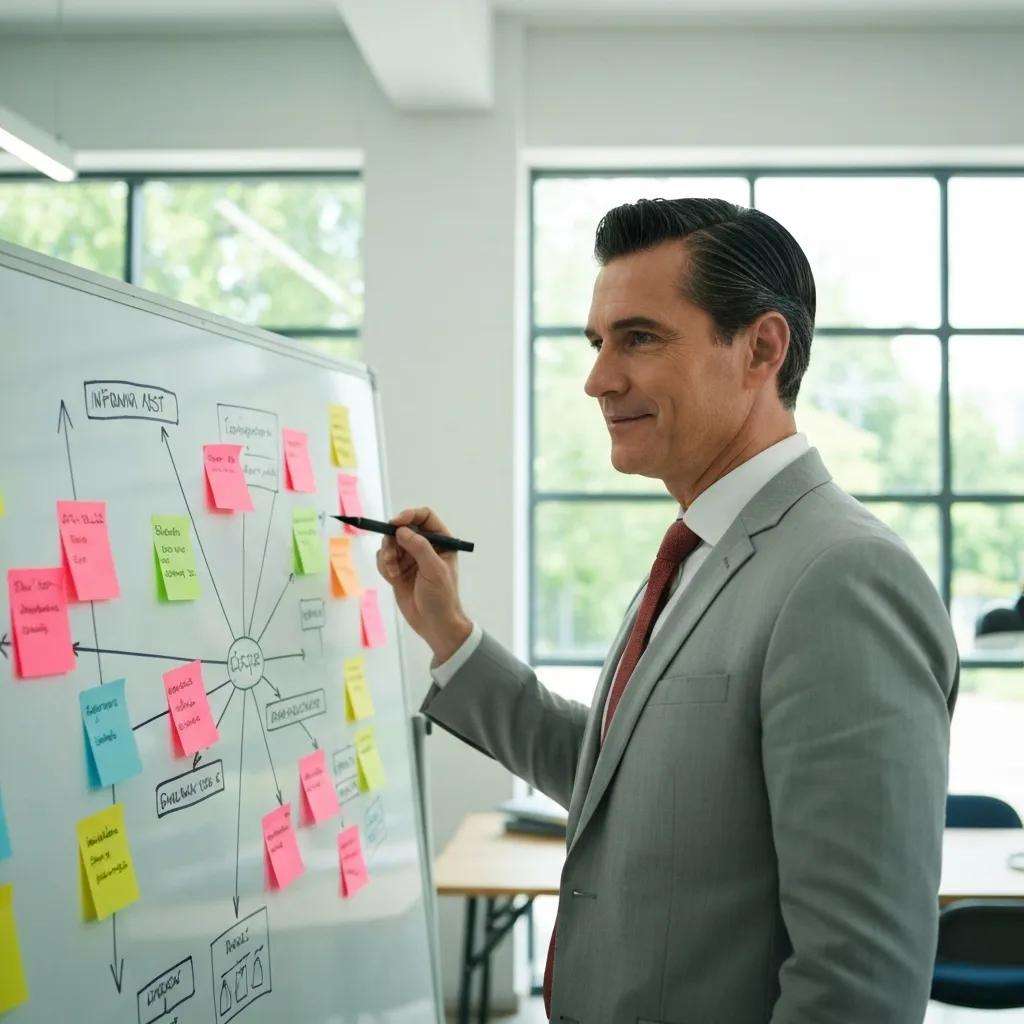
Project scope and context definition involves identifying information assets, organizational boundaries and relevant internal and external issues to tailor the ISMS project to business needs. A clear scope guides asset inventories, sets control boundaries and informs risk appetite. For example, mapping critical data flows across departments clarifies where security controls will apply and ensures targeted resource allocation for maximum impact.
What Should an Effective ISO 27001 Project Plan Include?
An effective ISO 27001 project plan documents objectives, tasks, milestones, resource assignments, communication channels and risk activities to enable accountability and traceability.
| Plan Element | Description | Purpose |
|---|---|---|
| Project Charter | Defines objectives, scope and goals | Aligns stakeholders and secures approval |
| Work Breakdown Structure | Breaks tasks into phases and deliverables | Coordinates team activities |
| Communication Plan | Schedules status updates and reports | Ensures ongoing stakeholder engagement |
| Resource Plan | Assigns roles, budget and tools | Guarantees required support and funding |
Including these elements ensures every phase of the ISO 27001 project is documented, agreed and ready for implementation of Annex A controls.
How Can You Secure Management Commitment for ISO 27001 Projects?
Management commitment arises when executives see clear alignment between ISO 27001 goals and business value, backed by risk metrics and compliance imperatives.
Key actions to secure commitment:
- Present risk assessment findings with quantified impact.
- Demonstrate cost-benefit of controls and certification.
- Embed security objectives in strategic planning documents.
- Provide executive dashboards with clear KPIs.
- Formalize sponsorship in the project charter.
Visible leadership support accelerates decision-making and resource allocation, laying the groundwork for robust risk management.
How Is Risk Management Integrated into ISO 27001 Projects?
Integrating risk management throughout an ISO 27001 project ensures that threats are identified, assessed and treated at each phase, driving proactive security improvements.
Core integration points:
- Risk identification during planning.
- Risk analysis and evaluation in design.
- Risk treatment planning parallel to controls mapping.
- Ongoing risk monitoring in implementation.
- Periodic risk reviews in project closure.
Embedding these activities maintains focus on threat mitigation from initiation through certification.
What Is the ISO 27001 Risk Assessment Methodology for Projects?
The ISO 27001 risk assessment methodology identifies assets, evaluates threat likelihood and impact, and prioritizes risks for treatment.
Typical steps include:
- Inventory information assets and dependencies.
- Analyze threats and vulnerabilities per asset.
- Estimate risk (likelihood × impact).
- Evaluate risks against organizational criteria.
- Select treatment options and document in the Risk Treatment Plan.
DataGuard, ISO 27001 Risk Assessment: A Complete Guide to Risk Management (2023)
This structured approach guides control selection and informs phased implementation of Annex A measures.
How Do You Implement ISO 27001 Controls (Annex A) During Project Phases?
Implementing Annex A controls integrates selected security measures into project deliverables to mitigate prioritized risks.
| Control Domain | Implementation Phase | Example Action |
|---|---|---|
| Access Control | Design & Deployment | Configure role-based access policies |
| Asset Management | Planning | Build and maintain an asset inventory |
| Cryptography | Implementation | Deploy encryption for sensitive data at rest |
| Incident Management | Evaluation | Develop and test incident response procedures |
Mapping controls to project phases turns risk treatment into concrete security improvements and prepares the project team for implementation tasks.
What Roles and Responsibilities Are Essential in ISO 27001 Project Teams?
A successful ISO 27001 project team combines leadership, technical expertise and audit capabilities under defined roles and reporting lines, ensuring effective coordination.
Key roles include:
- Executive Sponsor Champions the ISMS at board level.
- Project Manager Orchestrates planning, execution and certification readiness.
- Information Security Officer Oversees risk assessment and control selection.
- Technical Implementers Deploy controls and manage configurations.
- Internal Auditors Validate ISMS conformity and drive corrective actions.
The Knowledge Academy, ISO 27001 Roles and Responsibilities Explained (2023)
What Are the Key Responsibilities of an ISO 27001 Project Manager?
An ISO 27001 project manager leads scoping, risk assessment, resource coordination, stakeholder communication and audit preparation to ensure milestones are met.
Typical duties:
- Develop and maintain the project plan.
- Coordinate risk assessments and controls mapping.
- Liaise with executives and report on KPIs.
- Monitor progress, budgets and change requests.
- Prepare documentation for internal and external audits.
Strong project management keeps ISO 27001 initiatives on schedule and aligned with certification requirements.
How Do You Structure an Effective ISO 27001 Project Team?
Structuring the project team involves defining responsibilities, collaboration channels and escalation paths to cover planning, implementation and audit phases.
Best practices:
- Establish a RACI matrix linking roles to tasks.
- Assign domain experts for each Annex A control group.
- Schedule regular coordination meetings.
- Define clear escalation and decision-making procedures.
- Document communication protocols in the project plan.
A structured team framework promotes efficient collaboration and rapid issue resolution.
How Can Employee Engagement and Training Support ISO 27001 Success?

Targeted engagement and role-based training ensure personnel understand policies, procedures and control requirements, fostering an organizational security culture.
Effective activities:
- Conduct workshops on ISMS objectives and benefits.
- Deliver role-specific control implementation training.
- Provide accessible policy and procedure repositories.
- Track completion and gather feedback for updates.
- Recognize and reward security best practices.
Empowered and informed employees reduce nonconformities and drive sustained certification maintenance.
How Do You Prepare for ISO 27001 Certification and Ensure Continuous Improvement?
Certification preparation involves gap analysis, internal audits, corrective action and management reviews, followed by ongoing monitoring under the Plan-Do-Check-Act (PDCA) cycle.
Preparation steps:
- Perform a gap analysis against ISO 27001 controls.
- Conduct internal audits and close nonconformities.
- Schedule and support external certification audits.
- Implement corrective and preventive actions.
- Embed continuous improvement in management reviews.
Advisera, ISO 27001 Certification: What You Need to Know (2022)
Continuous PDCA adherence sustains ISMS maturity and drives long-term compliance.
What Is the Internal and External Audit Process for ISO 27001?
Internal audits validate ISMS alignment with requirements and identify improvements, while external audits confirm conformity for certification.
Audit process:
- Define audit scope, criteria and schedule.
- Train auditors on ISO 27001 requirements.
- Collect evidence of policy application and control effectiveness.
- Report findings and assign corrective actions.
- Verify closure of nonconformities and prepare certification evidence.
Audit insights feed KPI monitoring and inform maintenance activities.
How Do You Monitor and Measure ISO 27001 Project Success with KPIs?
Key performance indicators track ISMS implementation and control effectiveness, supporting data-driven decision making.
| KPI | Target | Frequency |
|---|---|---|
| Control Implementation Rate | 100 % by project end | Monthly |
| Nonconformity Closure Time | Per audit | |
| Critical Incident Count | Zero critical incidents | Quarterly |
| Training Completion Rate | 100 % of relevant staff | Annually |
Regular KPI reviews provide visibility into project progress and highlight areas for corrective action and continuous improvement.
What Are Best Practices for Maintaining ISO 27001 Certification and ISMS Evolution?
Maintaining certification and evolving the ISMS rely on scheduled risk reviews, management oversight, document updates and refreshed training.
Best practices:
- Schedule annual risk assessments and update the Statement of Applicability.
- Conduct management reviews at planned intervals.
- Refresh security awareness and control training.
- Benchmark ISMS performance against emerging standards.
- Apply lessons learned to refine policies and procedures.
Adopting these practices ensures ISMS resilience and positions the organization for future compliance challenges.
What Tools and Best Practices Enhance ISO 27001 Project Management?
Leveraging specialized tools streamlines planning, risk tracking, control mapping and audit readiness, boosting overall project efficiency.
Key tool categories:
- Gantt chart software for timeline management.
- Risk registries to automate threat tracking.
- ISMS platforms for policy, control and audit workflows.
- Document collaboration suites for policy version control.
- Analytics dashboards to visualize KPI trends.
A carefully selected toolset accelerates project delivery and supports integrated ISMS processes.
Which Project Management Software and Tools Support ISO 27001 Implementation?
Software such as Microsoft Project, Jira and dedicated ISMS platforms offer features for scheduling, risk registers, document control and audit trails.
Recommended tools:
- Microsoft Project for work breakdown and resource leveling.
- Jira for Agile-style issue and risk tracking.
- Confluence for central policy and procedure documentation.
- ISMS.online for end-to-end compliance workflows.
- Trello for lightweight task coordination.
Integrating these tools ensures that both project management and compliance requirements are met in a unified environment.
What Are Common Challenges in ISO 27001 Projects and How Can They Be Overcome?
Common hurdles include scope creep, resource shortages, change resistance and documentation overload, which can be mitigated through clear planning, phased roll-outs and stakeholder engagement.
Mitigation strategies:
- Prioritize controls by risk and focus limited resources.
- Apply change management techniques and early communication.
- Use predefined templates to accelerate documentation.
- Employ iterative sprints to maintain momentum.
- Address audit findings promptly with root-cause analysis.
Proactive challenge management accelerates implementation and aligns projects with best practices.
How Can You Integrate Project Management Methodologies Like Agile or Waterfall with ISO 27001?
Aligning Agile or Waterfall with ISO 27001 maps phases or sprints to PDCA steps, enabling iterative control deployment within a structured framework.
Integration approaches:
- Waterfall: Link requirement, design, implementation and testing phases to ISO 27001 PDCA cycles.
- Agile: Embed security backlog items in each sprint and conduct sprint reviews with risk reassessments.
- Hybrid: Combine waterfall milestones with Agile iterations for incremental certification readiness.
- Document user stories around control requirements and trace them to Annex A.
- Include security acceptance criteria in Definition of Done.
Methodology integration balances flexibility with the rigor needed for ISO 27001 compliance.
Frequently Asked Questions
What are the benefits of achieving ISO 27001 certification for an organization?
Achieving ISO 27001 certification provides numerous benefits, including enhanced information security, improved risk management, and increased customer trust. It demonstrates a commitment to protecting sensitive data and complying with legal and regulatory requirements. Additionally, certification can lead to operational efficiencies, as organizations streamline their processes and improve their overall security posture. It also opens up new business opportunities, as many clients and partners prefer to work with certified organizations, viewing it as a mark of quality and reliability in information security management.
How often should an organization conduct internal audits for ISO 27001 compliance?
Organizations should conduct internal audits for ISO 27001 compliance at least annually, although more frequent audits may be beneficial depending on the organization’s size, complexity, and risk profile. Regular audits help identify nonconformities, assess the effectiveness of the Information Security Management System (ISMS), and ensure continuous improvement. Additionally, organizations may choose to conduct audits after significant changes, such as new technology implementations or changes in business processes, to ensure ongoing compliance and effectiveness of their security measures.
What role does employee training play in maintaining ISO 27001 compliance?
Employee training is crucial for maintaining ISO 27001 compliance as it ensures that all personnel understand their roles and responsibilities regarding information security. Training programs should cover the organization’s security policies, procedures, and specific control measures relevant to each employee’s role. Regular training helps foster a culture of security awareness, reduces the likelihood of human error, and empowers employees to recognize and respond to security threats effectively. Continuous education and refresher courses are essential to keep staff updated on evolving security practices and compliance requirements.
What are the consequences of failing to maintain ISO 27001 certification?
Failing to maintain ISO 27001 certification can lead to several consequences, including loss of credibility and trust among clients and stakeholders. Organizations may face legal and regulatory penalties if they do not comply with data protection laws. Additionally, the inability to demonstrate effective information security management can result in increased vulnerability to data breaches and cyberattacks. This can lead to financial losses, reputational damage, and potential loss of business opportunities, as many clients prefer to engage with certified organizations for their security assurance.
How can organizations ensure continuous improvement in their ISMS after certification?
Organizations can ensure continuous improvement in their Information Security Management System (ISMS) by regularly reviewing and updating their policies, procedures, and controls based on audit findings, risk assessments, and changes in the business environment. Implementing the Plan-Do-Check-Act (PDCA) cycle helps maintain a structured approach to improvement. Additionally, fostering a culture of feedback and encouraging employee involvement in security initiatives can lead to innovative solutions and enhancements. Regular management reviews and benchmarking against industry standards also support ongoing development and maturity of the ISMS.
What tools can assist in the implementation and management of ISO 27001 projects?
Several tools can assist in the implementation and management of ISO 27001 projects, including project management software like Microsoft Project and Jira for scheduling and task tracking. Risk management tools help in identifying and assessing threats, while ISMS platforms streamline compliance workflows and documentation. Document collaboration tools facilitate version control and policy management. Additionally, analytics dashboards can visualize key performance indicators (KPIs) to monitor project progress and effectiveness. Selecting the right combination of tools enhances efficiency and supports integrated ISMS processes.