Key Requirements for ISO 27001 Certification Explained

Key Requirements for ISO 27001 Certification Explained: Essential Clauses, Controls, and Process
Implementing the requirements for ISO 27001 certification establishes a robust Information Security Management System (ISMS) that reduces breach risk and strengthens stakeholder trust. Organizations often struggle to navigate mandatory clauses, Annex A controls, and documentation demands, yet a clear roadmap transforms complexity into a structured security framework. This guide details (1) mandatory ISO 27001 clauses and the role of risk assessment, (2) step-by-step certification stages and selecting an accredited body, (3) Annex A control categories including the 11 new 2022 additions, (4) required documentation and crafting the Statement of Applicability, and (5) quantifying benefits and costs. Understanding these elements ensures seamless compliance and optimized security outcomes.
What Are the Mandatory ISO 27001 Certification Requirements?
Mandatory requirements for ISO 27001 certification include establishing an ISMS aligned to clauses 4–10, conducting a risk assessment, and implementing Annex A safeguards to support continual improvement.
Organizations must define context, leadership commitment, resource support, operational controls, performance evaluation, and corrective actions.
Key components include:
- Clause compliance covering organizational context, leadership, planning, support, operation, performance evaluation, and improvement.
- A documented ISMS that defines scope, policies, and responsibilities.
- A systematic risk assessment process to identify and treat information security risks.
- Implementation of relevant Annex A controls to mitigate identified risks.
Which ISO 27001 Clauses Must Organizations Comply With?

ISO 27001 clauses 4–10 set the mandatory structure for an ISMS by defining requirements from context analysis to continual improvement.
| Clause | Focus Area | Summary |
|---|---|---|
| 4 | Context of the Organization | Determine scope, interested parties, and external/internal factors |
| 5 | Leadership | Establish information security policy, roles, and management commitment |
| 6 | Planning | Identify risks and opportunities, set objectives, plan risk treatment |
| 7 | Support | Allocate resources, ensure competence, awareness, communication, documentation |
| 8 | Operation | Perform risk assessments and treatments, manage operational controls |
| 9 | Performance Evaluation | Conduct internal audits, management reviews, monitor ISMS performance |
| 10 | Improvement | Address nonconformities, implement corrective actions, foster continual improvement |
These clauses create a governance framework that naturally leads into designing an effective ISMS and conducting risk assessment.
How Does the Information Security Management System (ISMS) Support Certification?
An ISMS supports certification by providing a structured framework of policies, procedures, and controls that align with ISO 27001 requirements and drive continual improvement. It integrates risk management, documentation, and monitoring processes to ensure consistent security performance.
- Define and document information security policy and objectives.
- Implement controls covering people, processes, and technology to protect assets.
- Establish procedures for incident management, change control, and internal audits.
- Monitor and review ISMS effectiveness through metrics and management reviews.
This systematic approach to risk and control management seamlessly transitions into the detailed risk assessment that informs Annex A implementation.
What Is the Role of Risk Assessment in Meeting Certification Requirements?
Risk assessment identifies, analyzes, and evaluates information security threats and vulnerabilities to inform control selection and treatment. A thorough risk assessment ensures that Annex A controls address the organization’s unique risk profile.
- Identify assets and threats – Catalog information assets and potential threat sources.
- Analyze vulnerabilities – Determine weaknesses that could be exploited.
- Evaluate risk levels – Combine likelihood and impact to prioritize risks.
- Select treatment options – Choose controls to mitigate, transfer, accept, or avoid risks.
- Document and review – Maintain a risk treatment plan and update regularly.
This risk-driven methodology lays the groundwork for a successful certification process and control implementation.
How Does the ISO 27001 Certification Process Work?
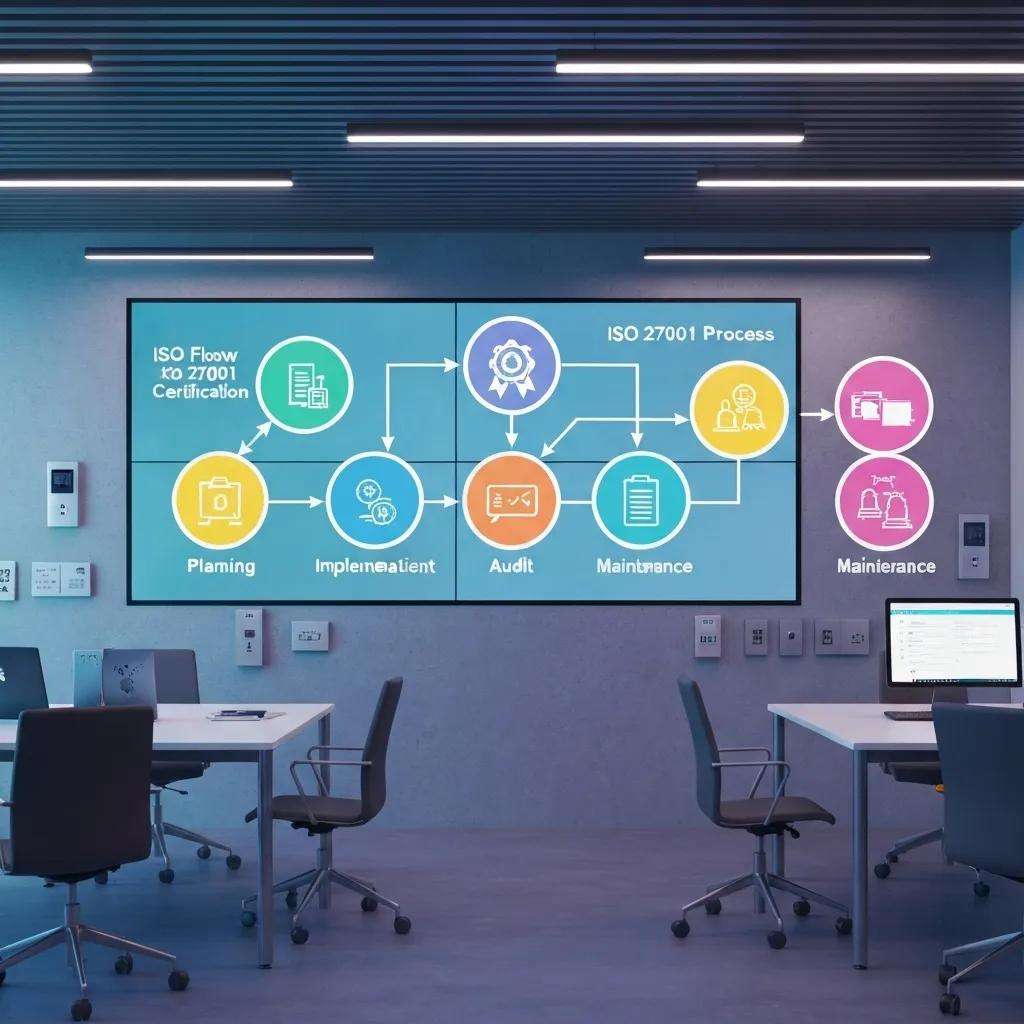
Secureframe, Drata, (2025)
Key Stages of ISO 27001 Certification
The ISO 27001 certification process involves planning, implementation, audit, and maintenance to verify that an ISMS meets standard requirements and sustains continuous improvement. This lifecycle ensures long-term security maturity and formal recognition of ISMS compliance.
What Are the Key Stages of ISO 27001 Certification?
Below is an overview of each certification stage, from initial planning through ongoing maintenance.
| Stage | Description | Outcome |
|---|---|---|
| Planning | Define scope, objectives, and risk assessment methodology | Approved ISMS scope and risk treatment plan |
| Implementation | Deploy policies, procedures, and Annex A controls | Operationalized ISMS with documented controls |
| Certification Audit | Stage 1: Documentation review; Stage 2: on-site audit of controls | Certification decision and audit report |
| Maintenance | Internal audits, management reviews, continual improvement activities | Sustained certification and improved resilience |
Completion of these stages secures formal recognition of ISMS compliance, after which organizations enter a cycle of maintenance, ensuring long-term security maturity.
How to Choose an Accredited ISO 27001 Certification Body?
- Confirm accreditation by recognized bodies (e.g., UKAS, ANAB).
- Verify auditor expertise in your industry sector and relevant regulations.
- Assess audit scope flexibility and support services for pre-audit readiness.
- Compare pricing transparency, audit timelines, and post-certification support.
Choosing a body aligned with organizational needs guarantees a credible assessment and efficient certification journey.
What Are ISO 27001 Annex A Controls and How Do They Impact Certification?
Secureframe, DataGuard, (2024)
ISO 27001 Annex A Controls
Annex A of ISO 27001:2022 includes 93 controls, divided into four categories: organizational, people, physical, and technological. These controls are essential for demonstrating comprehensive risk treatment and are selected based on risk assessment and the Statement of Applicability.
How Are the 93 Controls Categorized in ISO 27001:2022 Annex A?
The 93 security controls in Annex A:2022 group into four themes that align governance, workforce, facilities, and technology to address diverse risk areas.
- Organizational Controls – Policies, roles, asset inventory, supplier management.
- People Controls – Awareness training, background checks, disciplinary processes.
- Physical Controls – Access restrictions, equipment security, environmental safeguards.
- Technological Controls – Cryptography, backup, network security, malware protection.
Mapping controls into themes ensures targeted risk treatment and streamlined audit evidence.
What Are the 11 New Controls Introduced in ISO 27001:2022?
ISO 27001:2022 introduced 11 new Annex A controls to address modern threats and technologies:
- Threat intelligence integration for proactive risk identification.
- Secure coding and vulnerability testing in development processes.
- Data masking and anonymization for privacy protection.
- Configuration management and hardening of assets.
- Identity and access management enhancements.
- Remote working security policies and controls.
- Cloud service provider management and security.
- ICT readiness for business continuity planning.
- Physical and logical separation of development environments.
- Monitoring and observability of security events.
- Privacy enhancement measures aligned with data protection laws.
Incorporating these controls demonstrates forward-looking security practices that support certification.
What Documentation Is Required for ISO 27001 Certification Compliance?
DataGuard, Secureframe, Sprinto, (2024)
Mandatory Documents for ISO 27001 Certification
ISO 27001 compliance requires maintaining mandatory documents, including the ISMS scope statement, information security policy, risk assessment report, Statement of Applicability, internal audit records, and management review minutes. These documents provide evidence of ISMS design, operation, and improvement, which is crucial for the audit process.
Which Mandatory Documents Must Be Maintained for ISO 27001?
Below are the core documents required for certification, each serving a distinct purpose in the audit process.
| Document | Purpose | Key Elements |
|---|---|---|
| ISMS Scope Statement | Define boundaries and applicability of ISMS | Scope description, excluded areas, stakeholders |
| Information Security Policy | Establish security objectives and management intent | Policy statements, objectives, review schedule |
| Risk Assessment Report | Document risk analysis and evaluation | Asset list, risk ratings, risk acceptance levels |
| Statement of Applicability | Justify selected and excluded Annex A controls | Control list, implementation status, rationale |
| Internal Audit Records | Record audit findings and corrective actions | Audit plan, findings, corrective action logs |
| Management Review Minutes | Capture top-management ISMS performance review | Agenda, decisions, action items |
Maintaining these documents ensures transparent evidence of compliance and prepares the organization for every audit stage.
How to Create and Use the Statement of Applicability (SoA)?
The SoA is a critical document that lists all Annex A controls, indicating which are implemented, excluded, and why, linking directly to risk treatment decisions.
- Draft control matrix – List each Annex A control with implementation status.
- Justify exclusions – Provide clear rationale for any controls not applied.
- Map to risks – Reference specific risk assessment findings that drove control selection.
- Review and approve – Obtain management sign-off and update with each ISMS review cycle.
A well-constructed Statement of Applicability (SoA) serves as a pivotal document in the realm of risk management and information security, demonstrating a clear and traceable link between risk assessment, control selection, and continual improvement. The SoA acts as a blueprint that outlines the controls an organisation has chosen to implement to mitigate identified risks, ensuring that each decision is grounded in thorough analysis. By detailing which controls are applicable, why they were selected, and how they correspond to specific risks, the SoA not only assures stakeholders of the organisation’s commitment to risk management but also provides a framework for accountability. This traceability is crucial, as it allows for regular scrutiny and reassessment, ensuring that the SoA remains aligned with the evolving risk landscape.
Moreover, the SoA fosters a culture of continual improvement within an organisation. By integrating feedback from regular audits and risk assessments, the document can evolve to reflect changing conditions, both internal and external. This dynamic approach ensures that the selected controls are not only effective but also efficient in addressing the organisation’s objectives. Regular updates and revisions to the SoA based on new insights or changes in the operational environment signify an organisation’s proactive stance towards risk management. Therefore, a well-constructed SoA does more than fulfil compliance requirements; it becomes a vital tool for an organisation that actively engages in refining its risk management strategies, fostering resilience against potential threats and enhancing overall security posture.
What Are the Benefits and Costs of ISO 27001 Certification?
ISO 27001 certification has increasingly become a focal point for organisations aiming to enhance their information security management systems (ISMS). The primary benefit of obtaining ISO 27001 certification is the systematic approach it provides to managing sensitive data. By adhering to this internationally recognised standard, organisations can create a robust framework that enables them to identify, assess, and mitigate information security risks effectively. This not only helps in protecting valuable information but also boosts stakeholder confidence, as clients and partners are more likely to trust an organisation that demonstrates a commitment to protecting their data. Furthermore, the certification can lead to competitive advantages, as many clients now require ISO 27001 as a precondition for doing business.
However, it is essential to considered the costs associated with achieving ISO 27001 certification. The initial investment can be significant, encompassing expenses related to training staff, implementing necessary technological enhancements, and potentially hiring external consultants to facilitate the process. Additionally, there are ongoing costs tied to maintaining compliance, such as regular audits and continuous staff education to keep everyone updated on policies and procedures. Despite these expenses, many organisations find that the long-term benefits—such as reduced risk of data breaches, improved operational efficiency, and enhanced reputation—outweigh the initial financial outlay. Therefore, while the journey to certification can be resource-intensive, the strategic implementation of ISO 27001 can ultimately lead to substantial returns on investment for organisations committed to safeguarding their information assets.
How Does ISO 27001 Certification Improve Business Security and Reputation?
ISO 27001 certification delivers tangible security and market advantages:
- Risk reduction – Systematic risk management minimizes incidents and data breaches.
- Regulatory compliance – Aligns with GDPR, CCPA, and industry-specific requirements.
- Customer trust – Demonstrates commitment to protecting sensitive information.
- Competitive differentiation – Positions certified organizations favorably in vendor selection.
IT Governance, DataGuard, (2024)
Benefits of ISO 27001 Certification
ISO 27001 certification offers benefits such as risk reduction, regulatory compliance, customer trust, and competitive differentiation. These advantages contribute to stronger resilience and brand credibility, as well as improved security posture and enhanced reputation.
What Is the Typical Cost Breakdown for ISO 27001 Certification?
Below is a typical cost structure for ISO 27001 certification, which varies by organization size and scope.
| Cost Factor | Description | Approximate Range |
|---|---|---|
| Consultancy and Training | Gap analysis, risk assessment workshops | $5,000 – $20,000 |
| Implementation Resources | Tools, controls deployment, documentation | $10,000 – $50,000 |
| Certification Audit Fees | Stage 1 and Stage 2 auditor charges | $5,000 – $15,000 per year |
| Internal Audit and Review | Internal auditor time and management reviews | $3,000 – $10,000 annually |
IT Governance, Cyber Sierra, (2025)
Cost Breakdown for ISO 27001 Certification
The cost of ISO 27001 certification varies, with factors including consultancy and training, implementation resources, certification audit fees, and internal audit and review. Understanding this breakdown helps organizations budget appropriately and measure the return on security investment.
Organizing compliance around ISO 27001 requirements for clauses, risk assessment, Annex A controls, and documentation streamlines certification and enhances security resilience. Mapping each control and documenting treatment decisions in the SoA ensures auditors can trace risk management decisions directly. Integrating the certification process into organizational culture and budgeting for consultancy, implementation, and audit costs delivers both robust protection and measurable business value. Continuous review, improvement, and alignment with evolving threats keep the ISMS effective and certification status current.