A Comprehensive Guide to ISO 9001 Certification Costs

ISO 9001 Certification Cost for Automotive Manufacturers: What You Need to Know
Securing ISO 9001 certification can cost automotive manufacturers anywhere from $5,000 to $30,000 depending on audit scope, site count and existing quality management maturity. Clarity around automotive industry costs for ISO 9001 certification helps planners allocate budgets and minimize surprises. This guide breaks down typical fees, explores cost drivers, compares ISO 9001 with IATF 16949 expenses, offers reduction tactics and maps the certification journey step by step. For industry benchmarks on certification fees, see How Much Does ISO 9001 Certification Cost? – Acato.
Amtivo, How Much Does ISO 9001 Certification Cost? (2025)
You will learn:
- What a typical ISO 9001 certification investment entails
- Which factors drive costs in automotive quality management
- How IATF 16949 pricing adds to ISO 9001 fees
- Cost-saving strategies for manufacturers
- A clear roadmap from gap analysis to certificate issuance
What Is the Typical ISO 9001 Certification Cost for Automotive Manufacturers?
Initial ISO 9001 certification cost for automotive manufacturers covers registrar audit fees, consultant support and documentation work, usually ranging from $5,000 to $30,000. Audit duration correlates with site count and process complexity, while consultant involvement depends on existing QMS maturity. For example, a single-site parts supplier often budgets $8,000–$12,000 for first-time certification, laying the groundwork for ongoing quality assurance. Understanding this baseline guides realistic budgeting for automotive quality systems.
What Are the Main Components of ISO 9001 Certification Costs?

Before budgeting, it helps to itemize core expenses related to certification:
- Audit Fees – Charged per auditor-day based on registrar rates
- Consulting Fees – Advisory support for gap analysis and implementation
- Documentation – Development or revision of quality manuals and records
- Training – Employee workshops and internal auditor education
These core components often account for more than 70% of initial certification expenses and guide financial planning.
How Do Initial Certification and Ongoing Costs Differ?
| Stage | Scope | Typical Annual Cost |
|---|---|---|
| Initial Certification | Comprehensive system audit | $5,000–$30,000 |
| Surveillance Audits | Periodic checks on key processes | $1,500–$5,000 |
| Recertification Audit | Full reassessment every three years | $4,000–$20,000 |
Surveillance audits sustain compliance at lower incremental cost, while full recertification resets audit scope and fees.
What Hidden or Unexpected Costs Should Automotive Manufacturers Expect?
Beyond core fees, manufacturers should plan for:
- Travel and accommodation for off-site audits
- Corrective actions and process re-audits
- Software and system upgrades to meet ISO requirements
- Scope expansions for new product lines or sites
Contingency planning for these items prevents budget overruns and ensures a smooth certification path.
Which Factors Affect ISO 9001 Certification Cost in the Automotive Industry?
Automotive ISO 9001 pricing depends on organizational characteristics, QMS scope and market conditions. Company size dictates audit days, while multiple sites or complex product families expand effort. Geographic location influences registrar rates and travel expenses. Recognizing these influencers allows manufacturers to anticipate cost drivers and align certification budgets with operational realities.
British Assessment Bureau, How Much Does ISO 9001 Certification Cost? (2024)
How Does Company Size and Operational Complexity Impact Certification Price?
| Company Size | Audit Days | Typical Fee Range |
|---|---|---|
| Small ( | 2–3 days | $5,000–$10,000 |
| Medium (50–250) | 3–4 days | $10,000–$20,000 |
| Large (>250) | 5+ days | $20,000–$35,000 |
What Role Does the Scope of Your Quality Management System Play?
Scope influences audit depth and documentation volume:
- Single production line vs. multi-facility operations
- Number of product families and subassemblies
- Inclusion of design, development or aftermarket services
How Do Certification Bodies and Consultants Influence Costs?
| Provider Type | Fee Structure | Value Add |
|---|---|---|
| International Registrar | Premium per-day audit rates | Global recognition |
| Local Registrar | Competitive base rates | Regional familiarity |
| Specialized Consultant | Day-rate implementation support | Automotive QMS expertise |
How Does Geographic Location Affect ISO 9001 Certification Pricing?
Regional cost drivers include:
- Local labor and travel expenses for auditors
- Market competition among registrars
- Currency exchange fluctuations
Manufacturers in high-cost regions should factor in travel premiums and registrar surcharges.
How Does IATF 16949 Certification Cost Compare to ISO 9001 for Automotive Manufacturers?
IATF 16949 builds on ISO 9001 with automotive-specific requirements, typically adding 20–30% to audit days and fees. This surcharge reflects additional process audits, customer-specific mandates and gap-analysis activities.
Smithers, What Are the Differences Between ISO 9001 and IATF 16949? (2024)
Upgrading from baseline ISO 9001 to IATF 16949 often increases total certification investment by $3,000–$10,000, depending on system maturity and customer audit readiness.
What Is the Relationship Between ISO 9001 and IATF 16949 Standards?
| Standard | Focus | Requirement Difference |
|---|---|---|
| ISO 9001 | Generic quality management | Foundational QMS framework |
| IATF 16949 | Automotive quality and defect prevention | Includes ISO 9001 plus extra controls |
What Additional Costs Are Incurred When Adding IATF 16949 Certification?
Manufacturers should budget for:
- Specialized automotive process audits
- Customer-specific requirement assessments
- Extra training for IATF procedures
- Gap analysis and remediation activities
When Is IATF 16949 Certification Required for Automotive Suppliers?
Tier 1 and Tier 2 suppliers often mandate IATF 16949 to comply with OEM quality requirements, especially for safety-critical components. Meeting customer mandates ensures market access and long-term partnerships.
What Strategies Can Automotive Manufacturers Use to Reduce ISO 9001 Certification Costs?
Proactive cost management sharpens ROI on quality management investments. By leveraging internal expertise, phasing implementation and repurposing existing documentation, manufacturers can trim external fees and accelerate certification readiness. Evaluating grants or financial incentives further offsets up-front expenses and fosters a sustainable QMS approach.
Should You Use Internal Expertise or External Consultants?
Weigh the trade-offs between in-house resources and external support:
- Internal teams leverage institutional knowledge but may lack audit experience.
- External consultants expedite implementation with specialized skills but incur day rates.
A hybrid model often balances cost control with expert guidance.
How Can Phased Implementation Lower Certification Expenses?
Staging QMS deployment in phases allows:
- Prioritizing critical processes first
- Rolling out additional modules in subsequent cycles
- Spreading consultant fees and audit days over time
This approach aligns cash flow with certification milestones.
What Existing Systems and Documentation Can Be Leveraged?
Manufacturers can reuse:
- Current work instructions and process maps
- Data from previous audits or regulatory inspections
- Internal training materials and records
Leveraging these assets reduces new documentation requirements and consultant time.
Are There Grants or Financial Supports Available for Certification?
Explore funding opportunities such as:
- Government quality improvement grants
- Industry association subsidies for SMEs
- Regional economic development incentives
Securing external funding offsets certification fees and drives QMS adoption.
What Is the Step-by-Step ISO 9001 Certification Process for Automotive Manufacturers?
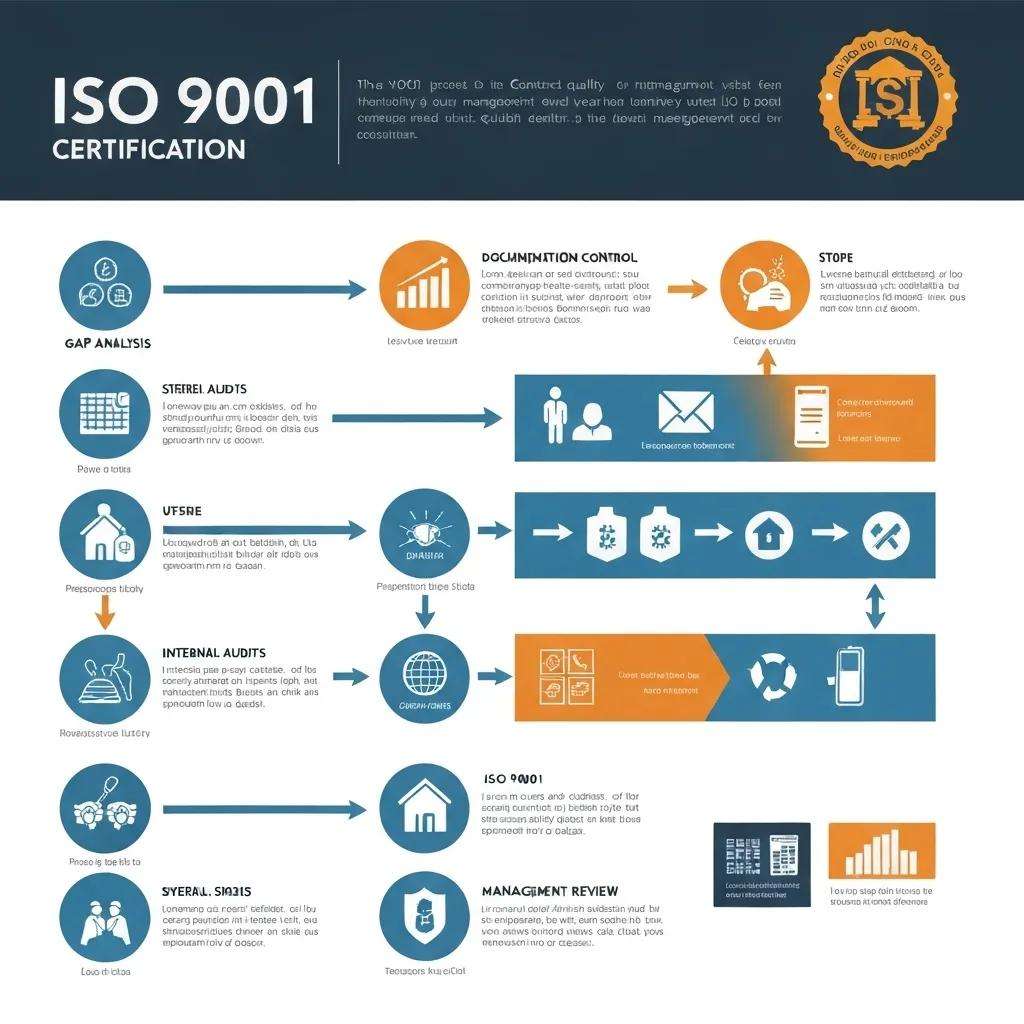
A structured roadmap guides organizations from gap analysis through registrar audits to achieve ISO 9001 certification. Clear stages, realistic timelines and defined roles ensure alignment with automotive quality requirements and resource planning.
What Are the Key Stages from Gap Analysis to Certification?
- Conduct a gap analysis to benchmark current QMS
- Develop or update quality manuals and procedures
- Implement process controls and corrective actions
- Perform an internal audit and management review
- Schedule and complete Stage 1 audit (readiness review)
- Undergo Stage 2 audit (full certification assessment)
- Receive ISO 9001 certificate and launch surveillance audits
How Long Does the Certification Process Typically Take?
Automotive QMS certification often spans:
- Small organizations: 3–6 months
- Medium enterprises: 6–9 months
- Large, multi-site manufacturers: 9–12 months
Timeline depends on QMS maturity and resource availability.
Who Are the Key Roles and Responsibilities During Certification?
Effective certification relies on:
- Quality Manager – Oversees QMS design and audit coordination
- Process Owners – Ensure documentation and controls are in place
- Internal Auditors – Validate compliance through mock audits
- Senior Leadership – Approve resources and review performance
- Consultant (if engaged) – Guides implementation and gap closure
Manufacturers that budget accurately, address cost drivers and follow a structured roadmap achieve ISO 9001 certification more efficiently. Understanding typical fees, leveraging existing assets and engaging the right expertise minimizes expenses while maximizing QMS value. By integrating strategic cost-saving measures and mapping clear implementation stages, automotive organizations can secure quality accreditation that drives customer confidence. Request a customized quote today to align your certification investment with business objectives.