
Key ISO 9001 Nonconformity Examples to Enhance Compliance

ISO 9001 Nonconformity Examples You Need to Know: Identify, Manage, and Prevent Quality Issues
Organisations that overlook ISO 9001 nonconformities risk failing audits, facing customer complaints, and wasting valuable resources. By understanding when requirements aren’t met, your team can pinpoint gaps in scope, leadership, planning, support, operations, evaluation, and improvement—and then implement structured corrective actions. This article defines nonconformity types, provides clear examples linked to specific clauses, outlines how to detect and manage them during audits, shares strategies for prevention, and demonstrates how Acato’s consulting, training, and templates can simplify your ISO 9001 compliance journey. We’ll also delve into industry-specific scenarios, the impact on your business, UKAS accreditation, and expert solutions for achieving lasting quality improvements.
What Is an ISO 9001 Nonconformity? Definitions and Types Explained
An ISO 9001 nonconformity occurs when a process, product, or system fails to meet a specified requirement, thereby compromising the effectiveness of your Quality Management System (QMS). This deviation from standard criteria necessitates corrective action to restore conformity and maintain your certification. For instance, a lack of documented procedures could lead to audit findings and corrective workflows under Clause 10.3.
What Are Major and Minor Nonconformities in ISO 9001?
Major nonconformities indicate systemic failures that pose a significant risk to product quality or compliance, whereas minor nonconformities represent isolated instances of non-compliance that do not present an immediate risk.
- Major nonconformity: Releasing products without the completion of required inspection records, as stipulated in Clause 8.5.1.
- Minor nonconformity: An isolated instance where a version control stamp was omitted from a procedure document.
These distinctions are crucial for assessing the severity of issues, allowing you to prioritise corrective actions for problems that affect customer satisfaction and regulatory compliance before addressing less critical documentation gaps.
How Does ISO 9001 Clause 10.2 Define Nonconformity and Corrective Action?
Clause 10.2 mandates the detection, correction, and elimination of the root causes of nonconformities through documented corrective actions. It requires organisations to:
- Identify the nonconformity and control its effects.
- Determine the root cause(s).
- Plan, implement, and verify the effectiveness of corrective measures.
By linking the detection of nonconformities to an effective corrective action process, Clause 10.2 ensures that continual improvement drives QMS maturity and reduces the likelihood of quality issues recurring.
ISO 9001 Nonconformity and Corrective Action
ISO 9001 requires a structured approach to address nonconformities, obliging organisations to identify, correct, and eliminate the root causes of issues through documented corrective actions. This process is fundamental to ensuring continuous improvement within the Quality Management System (QMS) and minimising the recurrence of quality problems.
ISO 9001:2015, Quality management systems — Requirements
This standard provides the essential framework for understanding and implementing corrective actions related to nonconformities, which is directly relevant to the article’s focus on ISO 9001 compliance.
Why Is Understanding Nonconformities Critical for Your Quality Management System?
Recognising nonconformities highlights weaknesses within your system, informs your risk-based thinking, and is essential for maintaining certification. Delaying the detection of nonconformities can lead to non-compliant products, customer disputes, and lost revenue. Prompt root cause analysis and corrective action planning foster process resilience, preparing your organisation effectively for both internal audits and external assessments conducted by UKAS-accredited bodies.
What Are Common ISO 9001 Nonconformity Examples by Clause?

Each clause within ISO 9001 can present unique nonconformities that can undermine the integrity of your system. The table below offers a summary of frequent breaches by clause, clarifying typical gaps and their real-world implications.
| Clause | Breach Description | Example Scenario |
|---|---|---|
| 4 | Undefined scope and interested parties | Failure to document key customer requirements within the Quality Manual. |
| 5 | Lack of leadership engagement | Absence of documented top management review minutes detailing strategic decisions. |
| 6 | Incomplete risk and opportunity planning | Setting objectives without a prior risk assessment of potential supply chain disruptions. |
| 7 | Inadequate resource allocation | Missing calibration records for critical measuring equipment. |
| 8 | Uncontrolled operational processes | Shipping products without the required conformity verification labels. |
| 9 | Missing performance evaluation activities | Internal audits not being scheduled, and management reviews not being conducted. |
| 10 | Absent corrective and continual improvement | Recurring customer complaints being logged without corresponding corrective action plans. |
These examples illustrate how overlooking requirements across context, leadership, planning, support, operation, evaluation, and improvement can jeopardise your readiness for certification. Next, we will detail the internal audit techniques used to identify these gaps early.
How Do You Identify ISO 9001 Nonconformities During Internal Audits?
Effective internal audits are fundamental to the timely detection of nonconformities and the mitigation of associated risks. By integrating checklists, risk-based thinking, and structured findings, audits can be transformed into proactive quality management tools.
What Are Effective Checklists for Detecting Nonconformities?
Implementing an audit checklist ensures systematic coverage of all relevant clauses and documented information. A comprehensive checklist should include:
- Verification of the documented scope, identification of interested parties, and accuracy of the Quality Manual.
- Confirmation of leadership’s involvement, communication of the quality policy, and availability of review records.
- Assessment of planning outputs, risk registers, and quality objectives.
- Review of personnel competence, infrastructure adequacy, and control of documented information.
- Inspection of production controls, monitoring devices, and product release records.
- Validation of audit schedules, management review meeting minutes, and key performance indicator (KPI) tracking.
- Evaluation of corrective action logs, root cause analyses, and records of improvement activities.
Utilising this checklist helps uncover gaps early and prepares your team for external assessments under ISO 9001:2015.
How Does Risk-Based Thinking Help Prevent Nonconformities?
Risk-based thinking embeds proactive hazard identification into process planning, thereby reducing the likelihood of nonconformities occurring. By assessing the probability and impact of potential failure modes, organisations can prioritise control measures, establish resilient objectives, and avoid recurring breaches. This forward-looking approach aligns with the requirements of Clause 6 and fosters a culture of continuous quality enhancement.
Risk-Based Thinking in ISO 9001
Risk-based thinking is a core element of ISO 9001, encouraging the proactive identification of hazards and the prioritisation of controls to mitigate potential failures. This approach, as detailed in the standard, assists organisations in setting robust objectives and cultivating a culture of continuous quality improvement, in line with the requirements of Clause 6.
ISO 9001:2015, Quality management systems — Requirements
The principle of risk-based thinking is fundamental to ISO 9001, and this citation reinforces the article’s emphasis on proactive quality management practices.
What Role Do Audit Findings Play in Nonconformity Identification?
Audit findings provide documented evidence of compliance gaps, serving as the foundation for corrective actions. Each finding must specify the relevant clause, clearly describe the breach, and suggest immediate containment measures. By linking findings to root cause analysis, organisations can transform audit reports into actionable improvement plans, ensuring that nonconformities are addressed before they are identified by customers or regulatory bodies.
What Is the Step-by-Step Process for Managing ISO 9001 Nonconformities?
A structured nonconformance management process ensures consistent handling from the point of detection through to closure.
- Record and Report
- Contain and Evaluate
- Root Cause Analysis
- Corrective Action Planning
- Implementation and Verification
- Closure and Review
This workflow aligns with Clause 10.3 and is essential for maintaining sustainable QMS performance.
How Do You Record and Report Nonconformities Effectively?
Capturing nonconformities in a standardised Nonconformity Report (NCR) ensures traceability and accountability. Key fields within an NCR should include:
- Nonconformity ID and the date it was detected.
- Reference to the affected process, product, or document.
- A detailed description of the requirement that was breached.
- Details of immediate containment measures taken and the responsible party.
This structured reporting framework facilitates a rapid response and establishes clear escalation paths for corrective planning.
What Are Root Cause Analysis Techniques for Nonconformities?
Root cause analysis is essential for uncovering systemic faults to prevent recurrence. Proven techniques include:
- 5 Whys: This method involves iteratively asking “Why?” until the fundamental cause of the issue is identified.
- Fishbone (Ishikawa) Diagram: This tool categorises potential causes under headings such as people, process, materials, equipment, environment, and measurement.
- Pareto Analysis: This technique helps prioritise actions by highlighting the most frequent sources of nonconformities.
Applying these methods allows for the transition from addressing symptoms to implementing lasting quality improvements.
How Do You Plan and Implement Corrective Actions?
Corrective action planning involves the following steps:
- Defining specific actions required to eliminate the identified root causes.
- Assigning responsibilities for each action and setting target completion dates.
- Determining the necessary resources and establishing criteria for review.
- Documenting the action plan within the QMS framework.
Once these actions are implemented, they serve to reinforce process controls and prevent similar nonconformities from occurring in the future.
How Is the Effectiveness of Corrective Actions Verified and Nonconformities Closed Out?
Verification ensures that the implemented corrective actions have achieved their intended results. Process indicators, follow-up audits, and customer feedback should be used to confirm that the issue has been resolved. Once the effectiveness of the actions is demonstrated, the NCR should be formally closed, and relevant documented information updated. This closure process supports continuous improvement and ensures readiness for subsequent audits.
How Can You Prevent Future ISO 9001 Nonconformities? Strategies and Best Practices
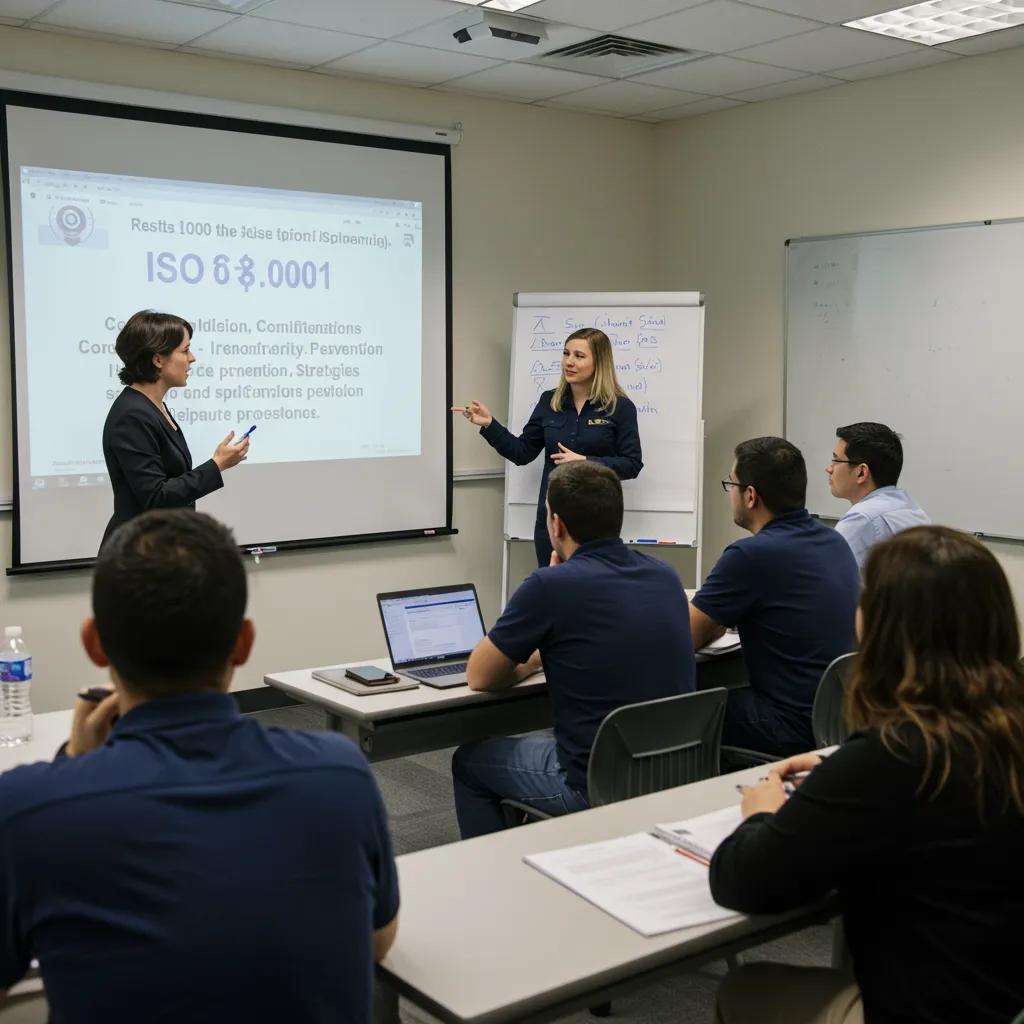
Preventing nonconformities requires a steadfast commitment to continual improvement, ensuring staff competence, and utilising digital tools that streamline quality control processes.
What Continual Improvement Methods Reduce Nonconformities?
Adopting Plan-Do-Check-Act cycles, monitoring performance metrics, and conducting regular process reviews are key drivers for ongoing enhancement. Methodologies such as Kaizen events, quality circles, and benchmarking against industry best practices systematically address gaps and elevate QMS maturity.
How Does Training and Awareness Support ISO 9001 Compliance?
Investing in role-specific training ensures that employees understand the requirements, controls, and reporting mechanisms relevant to their positions. Awareness sessions covering risk-based thinking, audit preparation, and root cause analysis help cultivate a quality-focused culture that minimises procedural oversights and documentation errors.
How Can QMS Software Streamline Nonconformity Management?
Quality management software solutions can automate the generation of NCRs, manage the routing of corrective action approvals, and track the status of verification activities. Integrating digital workflows with document control and audit modules reduces manual errors and accelerates resolution cycles, allowing teams to concentrate on strategic quality initiatives.
How Can Acato Help You Manage ISO 9001 Nonconformities? Consulting, Training, and Templates
Acato combines extensive ISO 9001 expertise with tailored services designed to strengthen your QMS and expedite your path to certification readiness.
What ISO 9001 Consulting Services Does Acato Offer for Nonconformity Management?
Our consultants conduct thorough gap analyses, assist in designing effective corrective action processes, and help embed risk-based frameworks to address systemic issues. We provide guidance on aligning documentation and preparing for audits to ensure seamless compliance.
How Do Acato’s Training Programmes Improve Nonconformity Handling?
Acato’s interactive workshops and e-learning modules cover essential topics such as internal auditing, root cause analysis, and corrective action planning. Participants gain practical skills to confidently detect, report, and eliminate nonconformities.
Which ISO 9001 Documentation Templates Support Nonconformity Reporting?
Acato’s ISO 9001 documentation templates, available in our template library, include ready-to-use NCR forms, audit checklists, and corrective action plans that are aligned with Clause 10.3 requirements, thereby accelerating implementation.
What Are Frequently Asked Questions About ISO 9001 Nonconformities?
Even experienced quality managers often seek clarification on the distinctions between terms, best practices for report writing, and industry-specific nuances related to nonconformities.
What Is the Difference Between Nonconformity and Corrective Action?
A nonconformity refers to the breach of a requirement itself, while corrective action encompasses the measures taken to eliminate its root cause and prevent its recurrence. Together, these elements form the core structure of Clause 10.3.
How Do You Write an Effective ISO 9001 Nonconformity Report?
An effective report should include:
- A clear description of the requirement and the actual condition observed.
- The relevant clause reference and an assessment of the impact.
- Details of the immediate containment steps taken.
- Assigned responsibilities and a follow-up schedule.
Well-written reports are crucial for driving accountability and effective corrective planning.
What Are Examples of Major and Minor Nonconformities?
- Major example: A systematic failure to calibrate essential measuring devices, which could compromise product integrity.
- Minor example: An occasional omission of document revision numbers, which does not impact the process outcome.
How Do You Identify Nonconformities in Different Industries?
While all sectors share fundamental QMS requirements, industry-specific risks can vary. For example, construction firms might encounter scope definition lapses, service industries may lack documented evidence of staff competence, and government bodies might omit management review minutes. Tailoring audits to sector-specific requirements ensures that no breach goes unnoticed.
What Are Industry-Specific ISO 9001 Nonconformity Examples?
Contextual examples help illustrate how various sectors can encounter unique gaps related to scope, resources, and processes.
What Nonconformities Are Common in Construction Quality Management?
In the construction sector, failing to capture evolving regulatory requirements or site conditions can constitute a breach of Clause 4.1 scope controls. Missing safety inspection records, as required under Clause 8.5, can lead to project delays and compliance risks.
How Do Service Industries Experience ISO 9001 Nonconformities?
Service providers frequently omit evidence of staff competence (Clause 7.2) or neglect to monitor client satisfaction effectively (Clause 9.1.2). These gaps can diminish the customer experience and hinder continual improvement cycles.
What Are Legal and Government Sector Nonconformity Examples?
Within legal and government organisations, the absence of documented conflict-of-interest policies (Clause 7.5) or missing attestations from management reviews (Clause 9.3) can compromise impartiality and policy enforcement, potentially jeopardising regulatory standing.
How Do ISO 9001 Nonconformities Impact Business Performance and Certification?
Ignoring nonconformities not only risks the loss of certification but also erodes operational efficiency, undermines stakeholder trust, and negatively impacts profitability.
What Are the Risks of Ignoring Nonconformities in Your QMS?
Unaddressed breaches can result in repeated audit findings, product recalls, and damage to your organisation’s reputation. Over time, persistent nonconformities increase the cost of poor quality and strain customer relationships.
How Does Effective Nonconformity Management Improve Operational Efficiency?
By addressing root causes and reinforcing process controls, organisations can reduce rework, streamline inspections, and optimise resource allocation, leading to increased throughput and cost savings.
What Role Does UKAS Accreditation Play in Nonconformity Resolution?
UKAS-accredited assessments confirm that certification bodies adhere to impartial and competent audit practices. Aligning your corrective actions with UKAS guidelines (find more information at ukas.com) enhances credibility with regulators and customers alike.
Acato’s comprehensive approach, encompassing consulting, templates, and training, empowers your team to effectively identify, manage, and prevent ISO 9001 nonconformities, thereby safeguarding your certification and achieving operational excellence. Contact us to discover how our expertise in ISO 9001 processes can transform your quality management journey: explore understanding the ISO 9001 process approach, learn how to achieve ISO 9001 certification, and deploy our ready-to-use documentation templates for immediate impact.
By incorporating these nonconformity examples and strategies, you can secure the integrity of your QMS, enhance stakeholder confidence, and position your organisation for sustained growth. Take the next step towards impeccable ISO 9001 compliance with Acato’s expert guidance and resources.